
E-nano Index Futures

E-nano Index Futures are CME Group's smallest equity index futures contracts. They let you trade major U.S. stock indexes (like the S&P 500 and Nasdaq-100) with a much smaller contract size.
Q1: What is the difference from E-nano Index Futures and ETFs ?
ETFs are great for simple, long-term exposure. But if you want more flexibility to trade the market, E-nano Futures offer three key differences.
Put up less money upfront
With an ETF, if you want $20,000 of market exposure, you generally need to invest $20,000 when paying with cash. Futures use margin instead of requiring the full notional value upfront.
The market move is the same: a 1% move on $20,000 of exposure is roughly $200.
But with futures, that $200 gain or loss is measured against the margin supporting your position—not the full $20,000 exposure.
Less money upfront—but bigger swings relative to what you put up.
Go long or short directly
Place a Buy or Sell order for E-nano Index Futures based on your market outlook.
You don't need to own the underlying asset before selling a futures contract. Unlike shorting an ETF, you don't need to borrow shares or use an inverse ETF to take a bearish view.
Trade beyond regular stock-market hours
E-nano Futures trade during extended futures-market hours, giving you more flexibility to respond to market moves outside regular stock-market hours.
Keep in mind that liquidity and spreads can vary outside regular hours, so longer trading hours don't guarantee a better fill.
The key difference
The market view can be the same. The way you express that view is different.
Less money upfront. Long or short. More trading hours.
The trade-off: futures use margin and have expiration dates, so they require more active risk management than a typical buy-and-hold ETF.
Q2: How can we get started on E-nano Index Futures?
If you already trade stocks, the basic idea is familiar.
Place a Buy or Sell order for E-nano Index Futures based on your market outlook.
Unlike options, you don't need to choose a strike price or account for time value and implied volatility just to express your market view.
You do need to understand a few Futures basics—especially margin, expiration, and how to close a position.
The trading logic is simple. The risks still require attention.
Q3: How do I trade E-nano Futures?
If your brokerage account supports futures, the process is straightforward:
1. Search
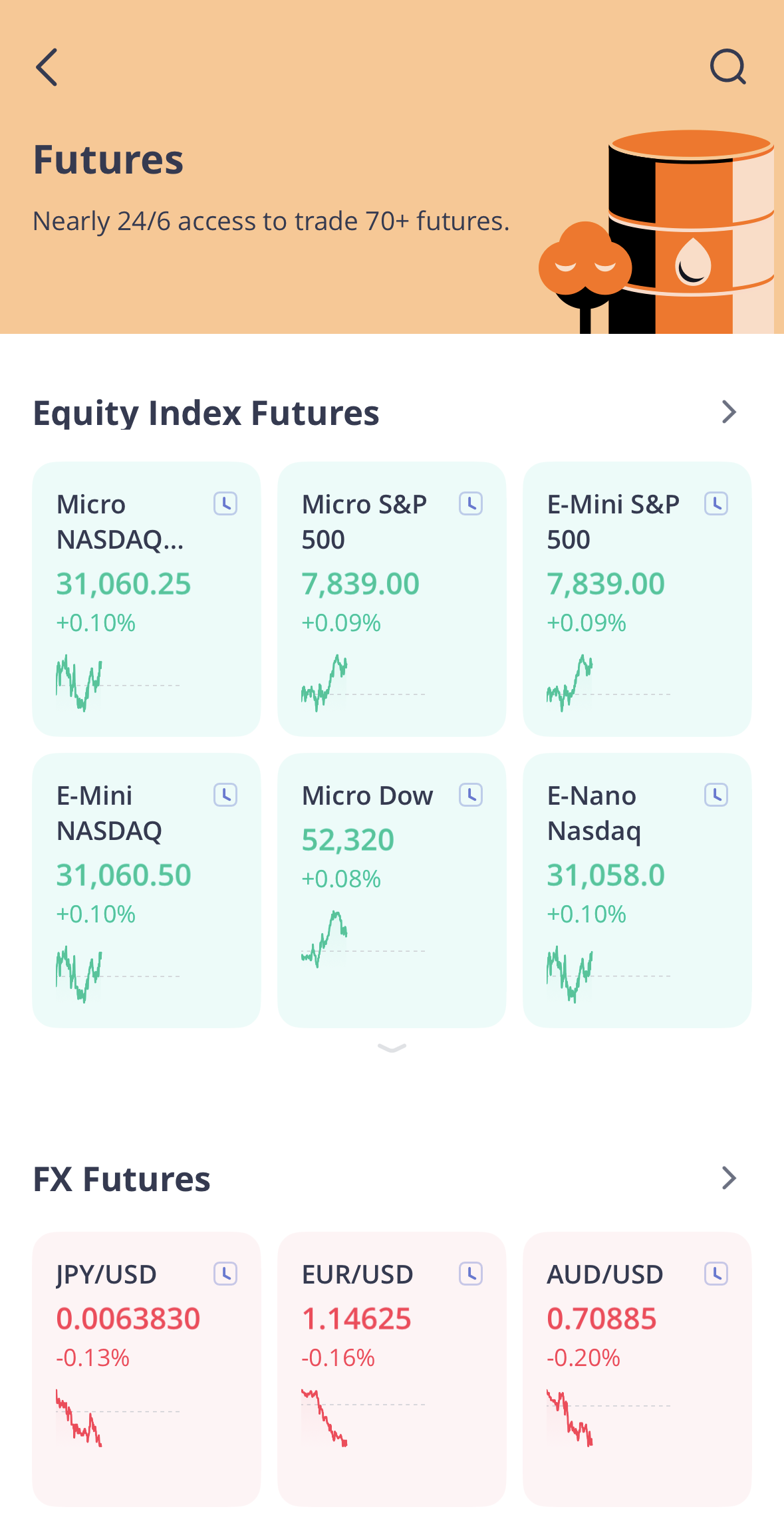
Go to Markets > Futures > Equity Index Futures
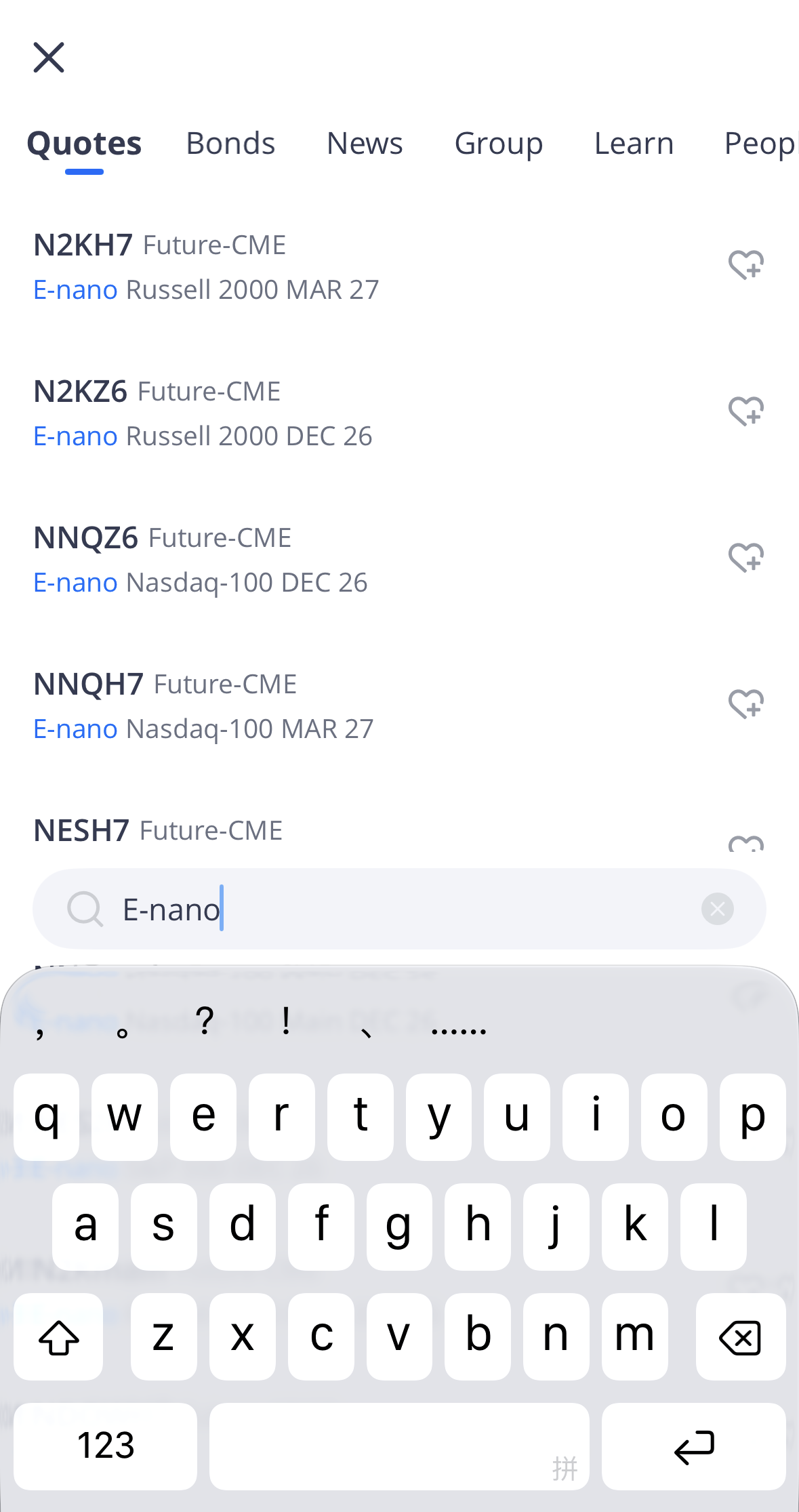
Or type “e-nano” in search bar
2. Choose
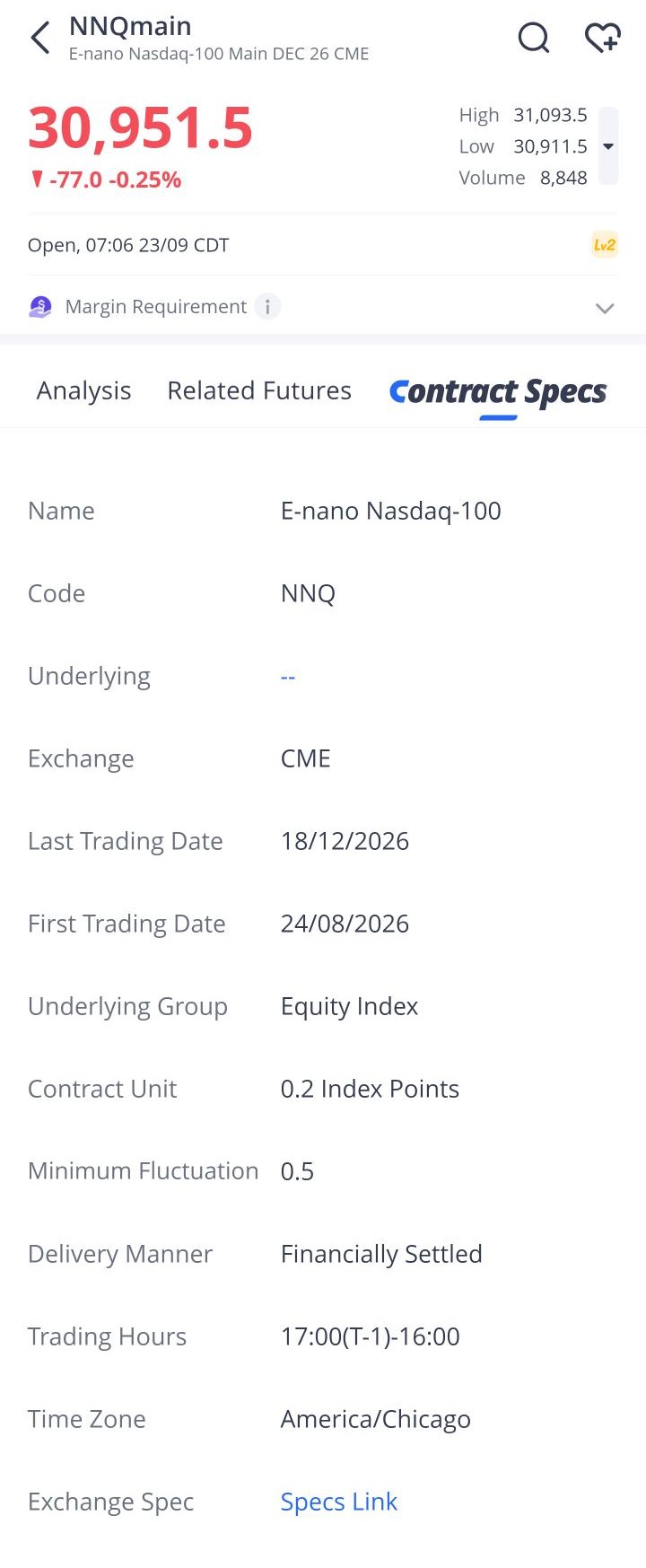
Select the contract and check its price, expiration, and contract specifications.
3. Trade
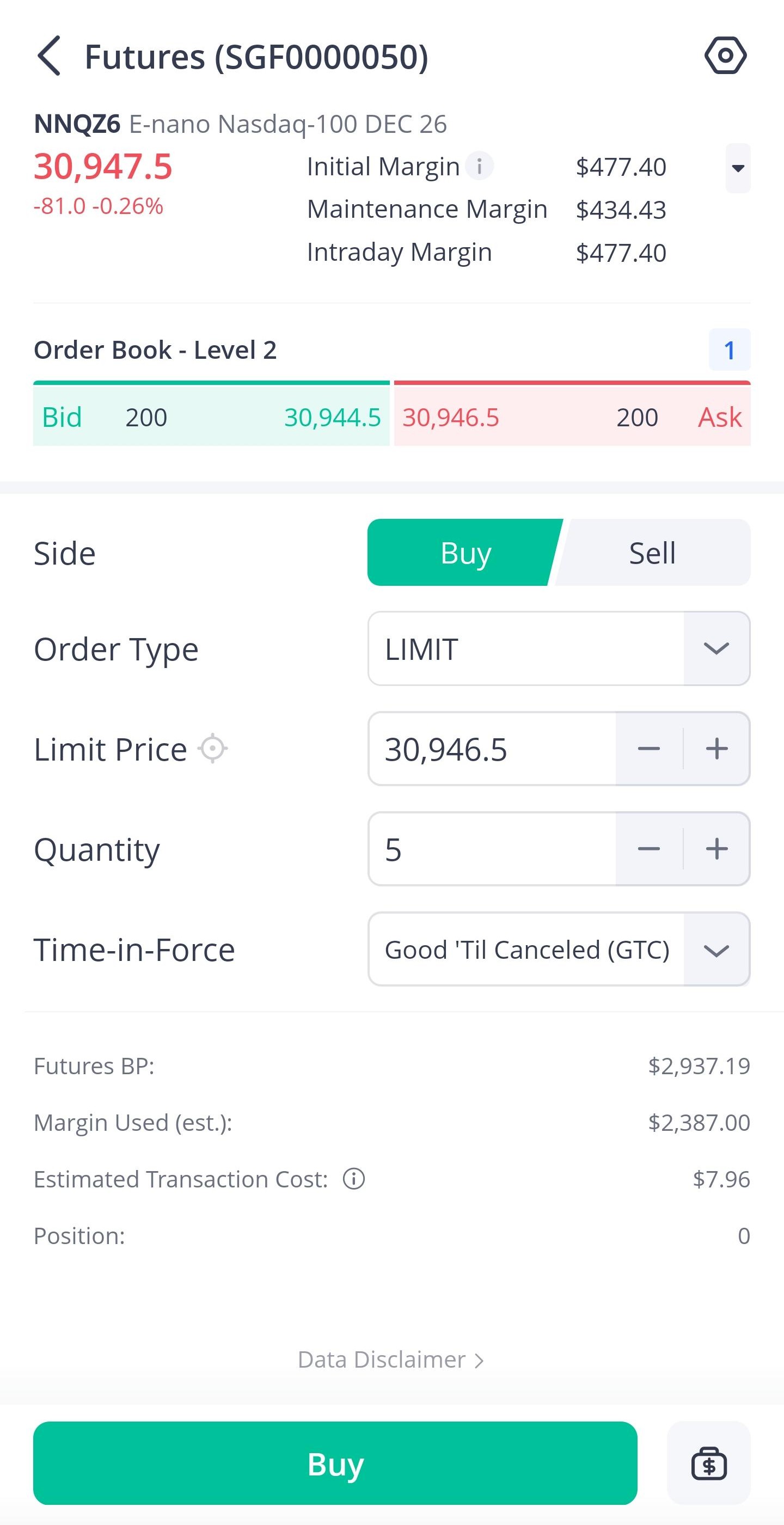
Place a Buy or Sell order for E-nano Index Futures based on your market outlook.
Enter the number of contracts and your order type.
4. Close
To close your position, take the opposite side:
Buy → Sell to close
Sell → Buy to close
Before your first trade, make sure you understand the contract size, margin requirement, and potential P&L.
Q4: What should I know about the risk?
The most important thing to remember:
Your margin is not your maximum possible loss.
Futures use margin, which means your market exposure can be larger than the cash you put up. A relatively small market move can therefore have a larger impact on your account.
If your account falls below the applicable margin requirements, your broker may require additional funds or liquidate your position.
And unlike stocks or ETFs, futures contracts expire.
Before trading, know three things:
- How much can I gain or lose?
- When does my contract expire?
- What happens if the market moves against me?
E-nano Futures have smaller contract sizes, but smaller does not mean risk-free.
No content should be construed as investment advice or recommendation, or an offer or solicitation, to deal in any investment product. Investors may wish to seek advice from a financial adviser before investing. In the event that investors choose not to seek advice from a financial adviser, they should consider whether the investment is suitable for them.

All Comments